
Sites with stable monthly traffic, many content pages and a meaningful share of organic or direct visits.

AdPushUp
Publisher monetisation optimisation · Publisher-side revenue operations
1. Platform role and category
AdPushUp sits between publishers and multiple exchanges, networks and mediated demand sources. Its core is request orchestration, bidding and layout experimentation.
It is closer to a website monetisation-optimisation platform plus managed ad-ops service than to a standalone publisher network such as AdSense.
Unlike a pure SSP, it is not primarily selling platform-wide inventory. Unlike AdSense, it leans more heavily on multi-demand competition, layout tests and human optimisation.
2. Business model and commercial terms
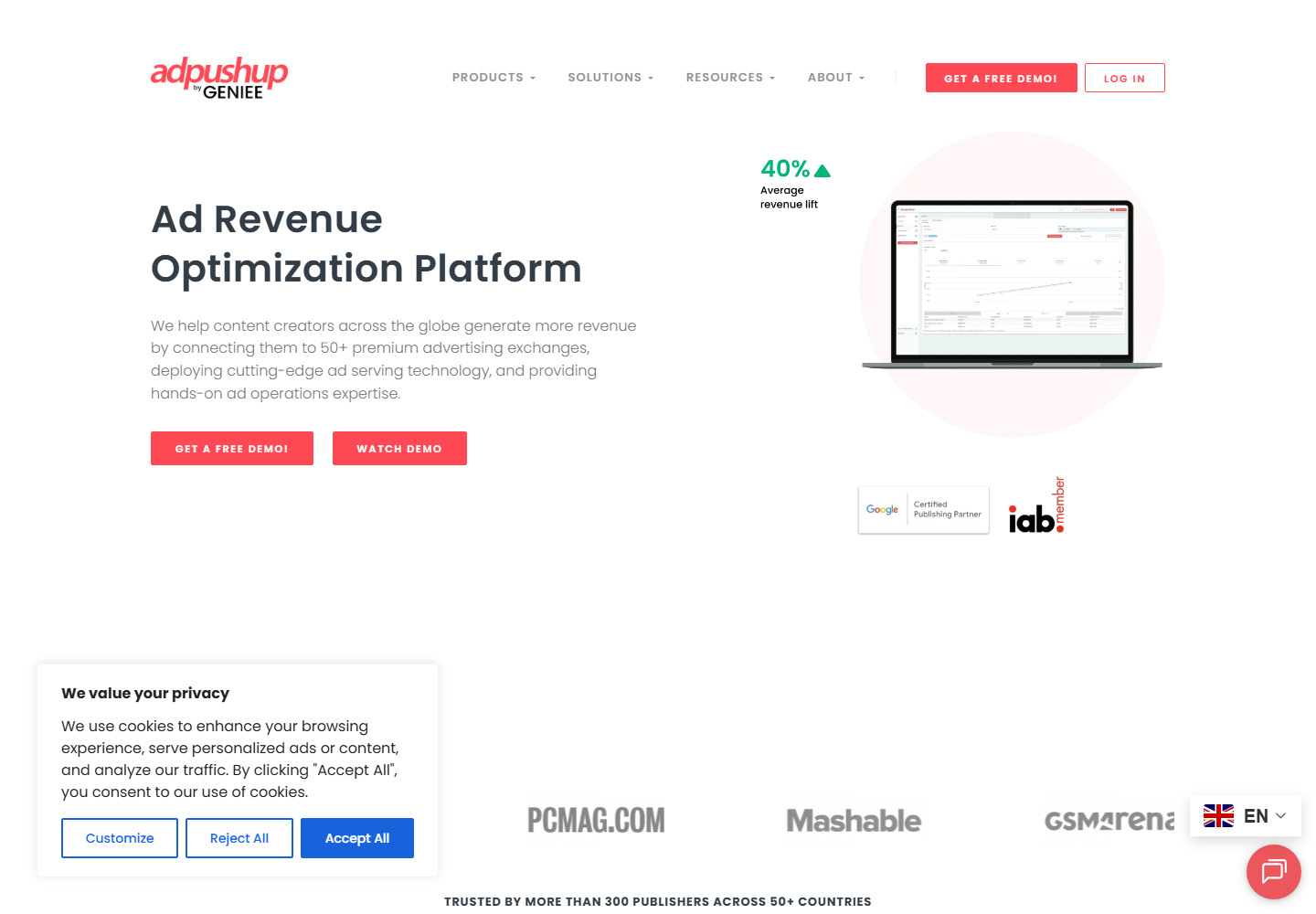
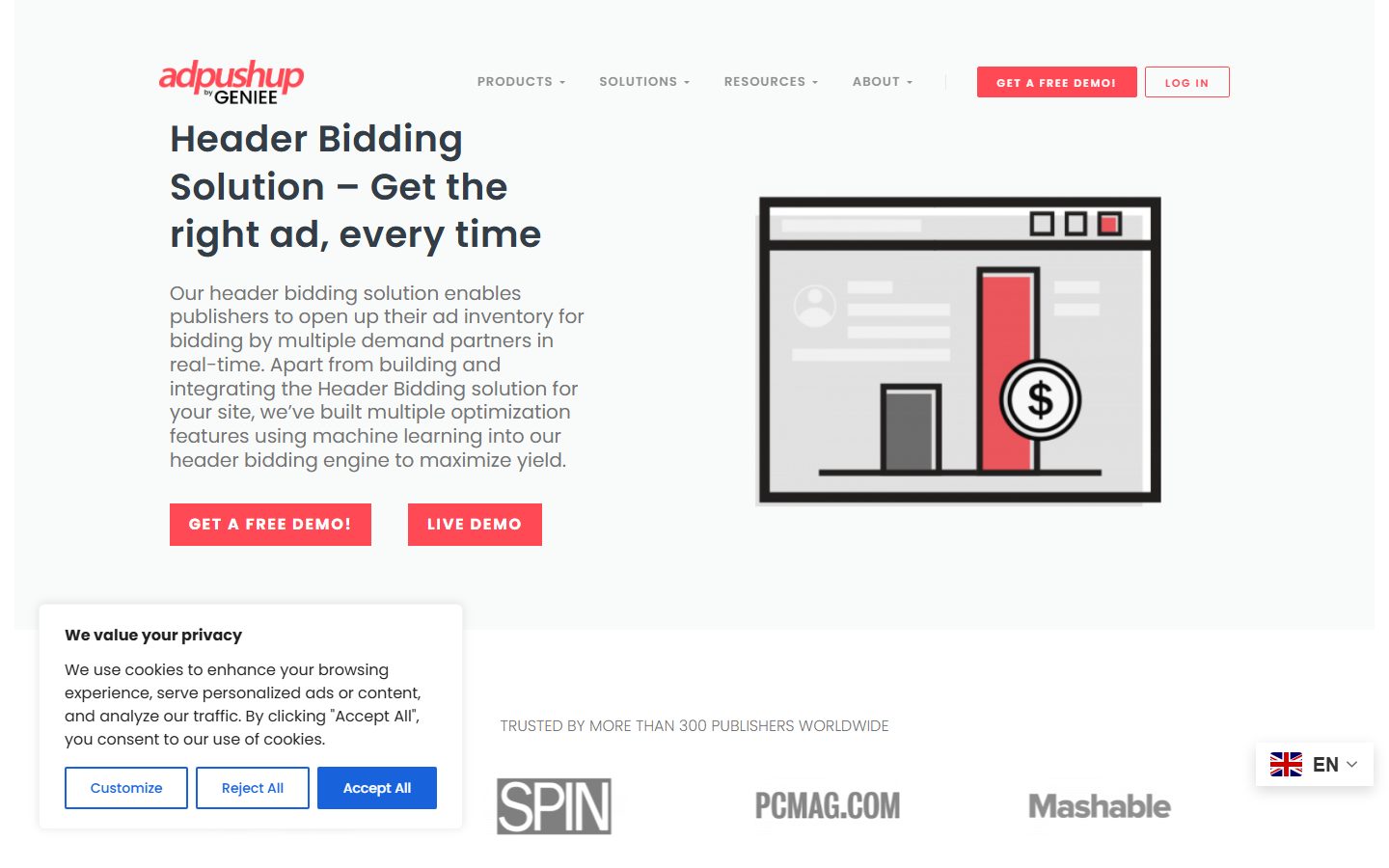
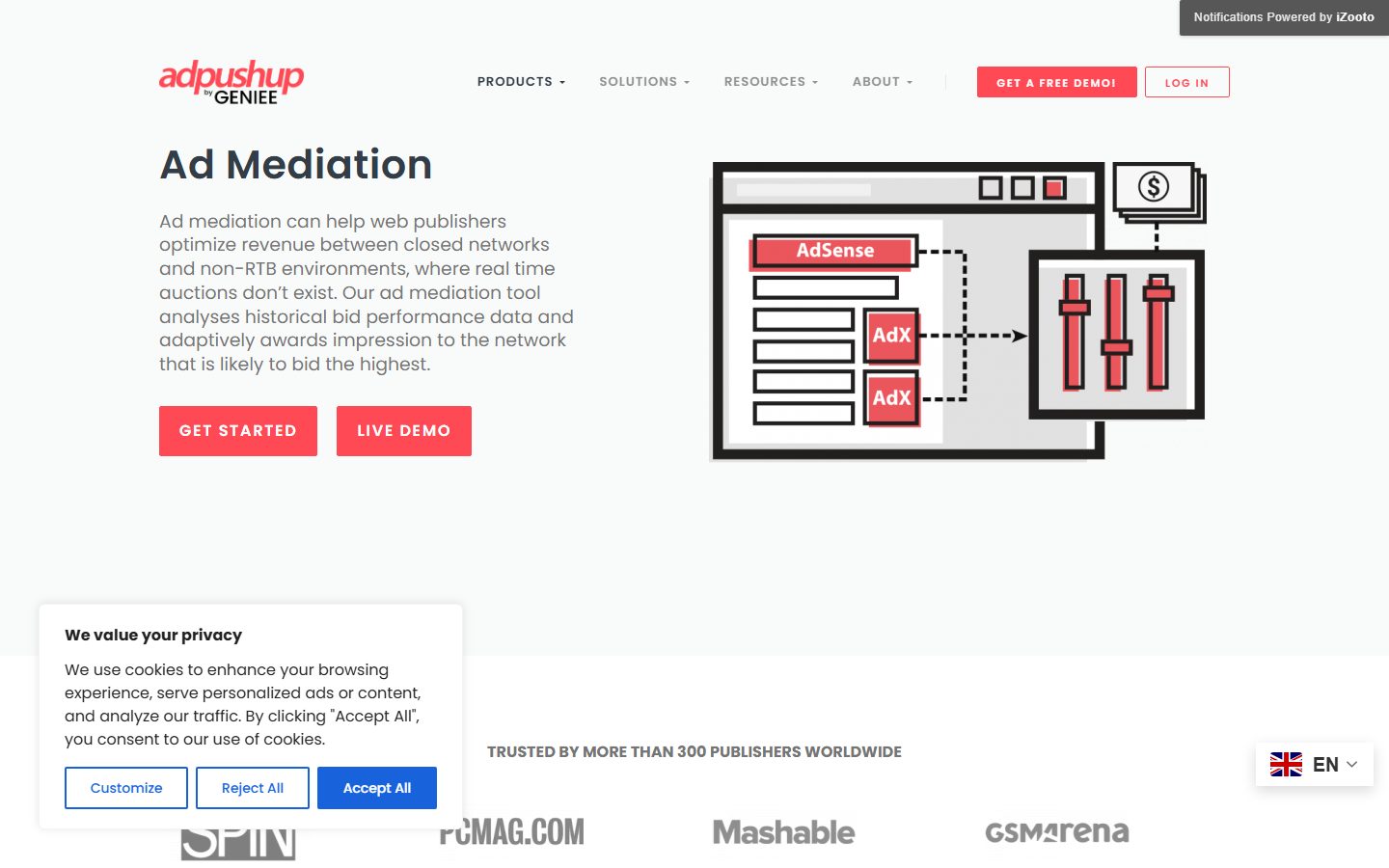
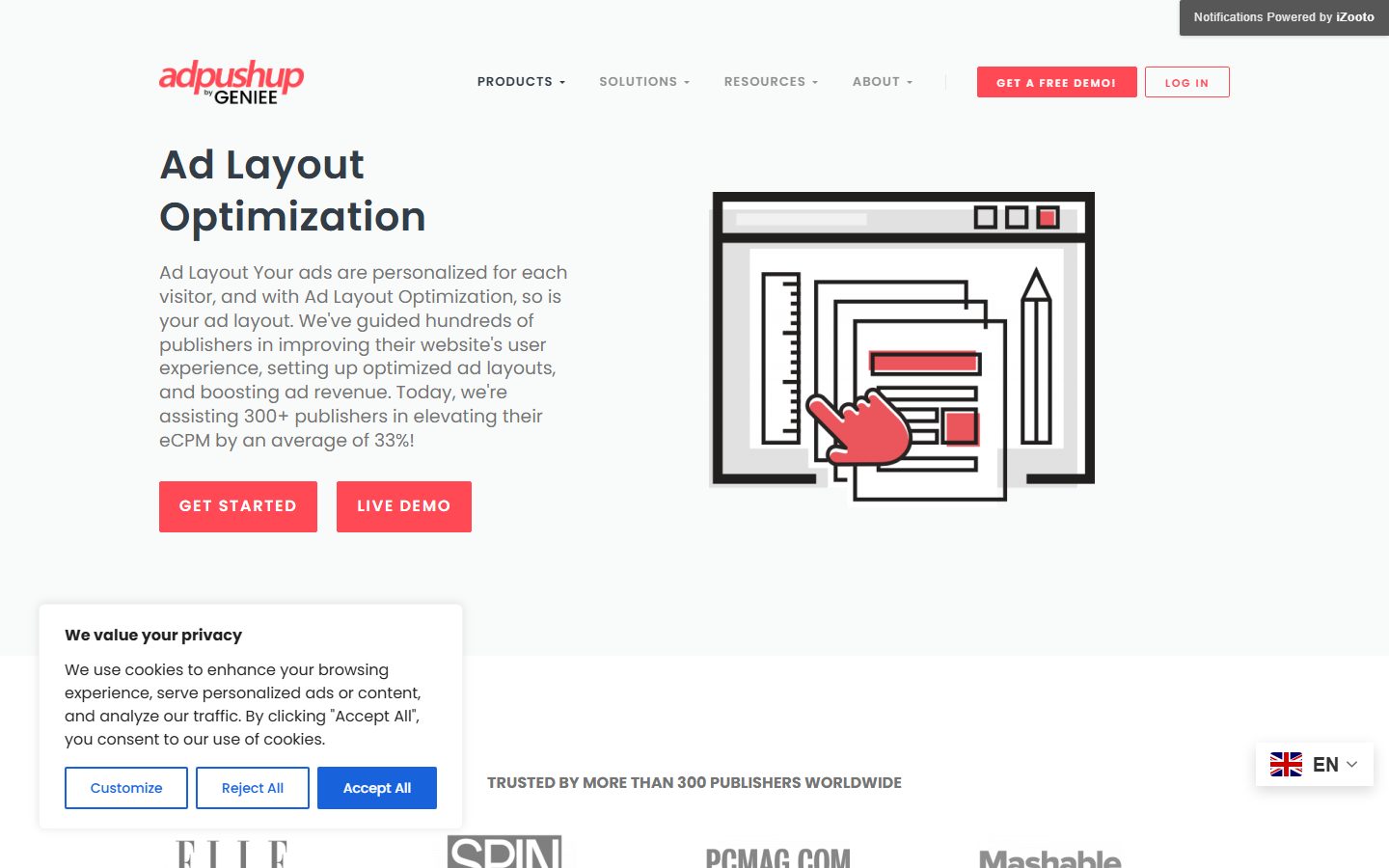
The official site highlights 50+ advertising exchanges and demand partners, header bidding, ad mediation, layout optimisation, adblock recovery, video and native formats.
Commercial access generally moves through qualification, integration review and a revenue-share or service agreement; a public feature page is not a public standard price list.
The material checks are revenue share, payment cycle, data access, code ownership, treatment of live placements after termination and whether existing AdSense/AdX configurations must migrate.
3. Where value comes from
Value levers
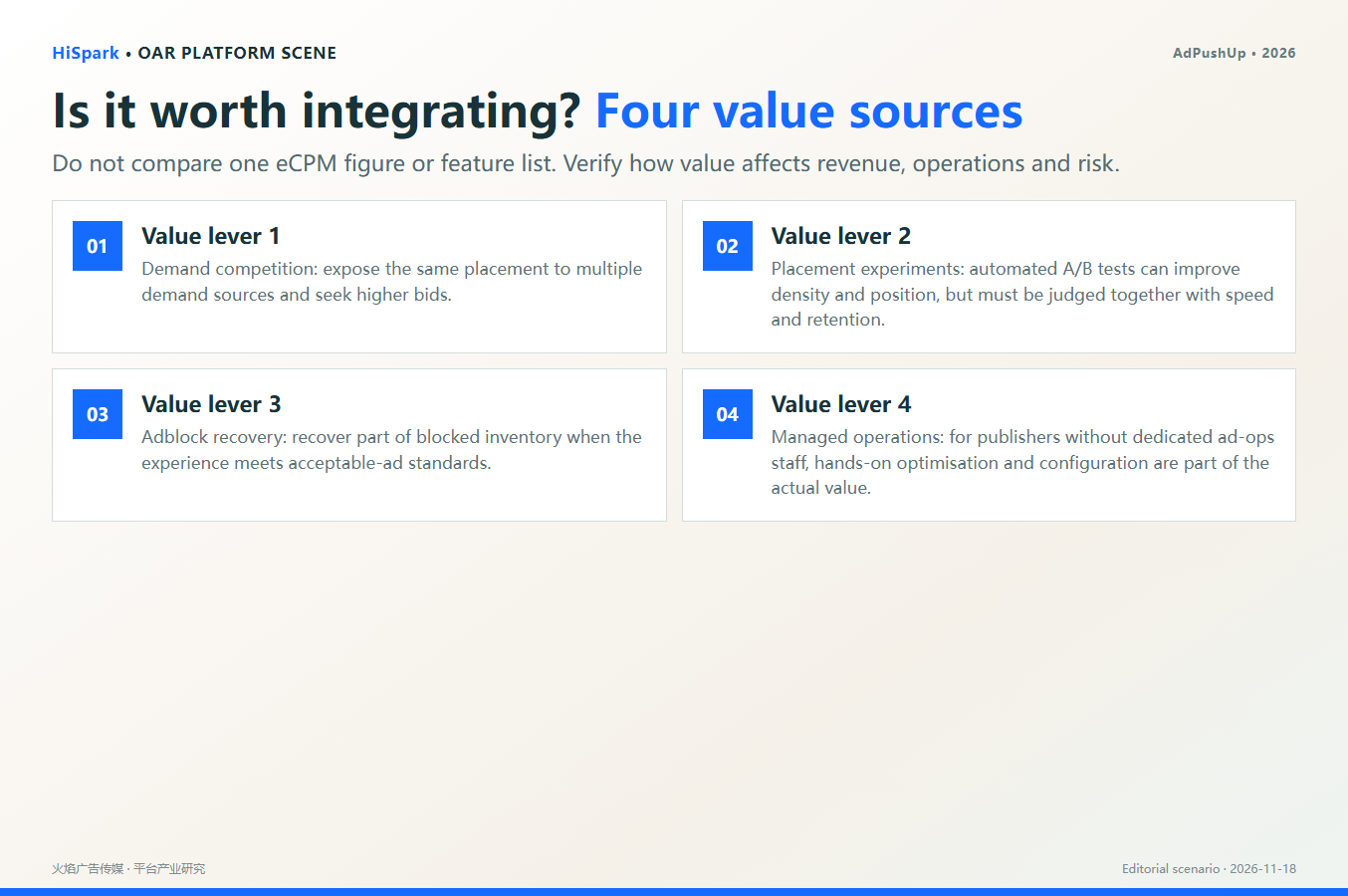
- Demand competition: expose the same placement to multiple demand sources and seek higher bids.
- Placement experiments: automated A/B tests can improve density and position, but must be judged together with speed and retention.
Operating value
- Adblock recovery: recover part of blocked inventory when the experience meets acceptable-ad standards.
- Managed operations: for publishers without dedicated ad-ops staff, hands-on optimisation and configuration are part of the actual value.
4. Who fits, and who should wait
A good fit when
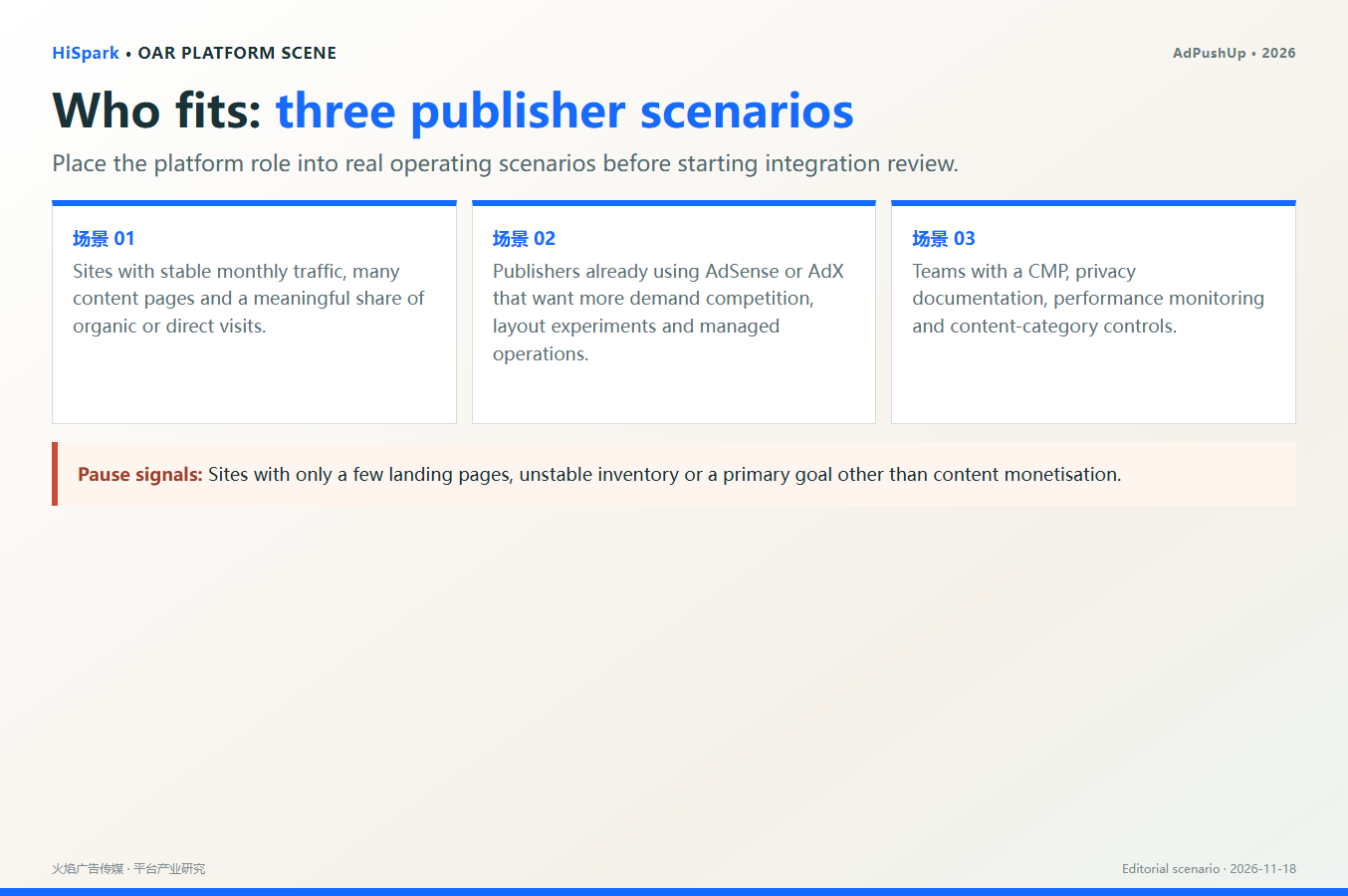
- Sites with stable monthly traffic, many content pages and a meaningful share of organic or direct visits.
- Publishers already using AdSense or AdX that want more demand competition, layout experiments and managed operations.
- Teams with a CMP, privacy documentation, performance monitoring and content-category controls.
Do not rush when
- Sites with only a few landing pages, unstable inventory or a primary goal other than content monetisation.
- Teams wanting fully self-service access with no operator involvement or only a one-off eCPM comparison.
- Sensitive child, medical or financial sites without ad-quality, consent and performance review capacity.
5. A controlled integration path
- Preflight: review content, traffic sources, geography, page speed and the current ad stack.
- Limited test: preserve the existing setup and define control pages and an observation window.
- Bidding and placements: agree on header bidding, mediation, floors and ad density.
- Four-week review: compare RPM/EPMV, viewability, latency, CLS, retention and complaints in one view.
6. AdSense, SSP and publisher optimisation are different roles
| Role | Category | What it primarily sells |
|---|---|---|
| AdPushUp | Publisher monetisation optimisation | Managed optimisation + demand orchestration |
| AdSense | Publisher network | Demand access and basic reporting |
| SSP | Sell-side platform | Inventory monetisation and exchange access |
A publisher can use multiple layers together. The decision is not which logo replaces another, but who controls demand, inventory, testing, data, compliance and operations.
7. Typical customer scenarios
Put the platform back into a real publisher or advertiser workflow. The same feature set can be valuable for one team and premature for another.
Publishers already using AdSense or AdX that want more demand competition, layout experiments and managed operations.
Teams with a CMP, privacy documentation, performance monitoring and content-category controls.
Pause signals
- Sites with only a few landing pages, unstable inventory or a primary goal other than content monetisation.
- Teams wanting fully self-service access with no operator involvement or only a one-off eCPM comparison.
- Sensitive child, medical or financial sites without ad-quality, consent and performance review capacity.
8. How to judge whether the value is real
Do not reduce the decision to one headline metric. Value must be visible in revenue quality, operating hours, risk control and the ability to explain results to management.
| Value source | What to verify | Evidence |
|---|---|---|
| Demand competition: expose the same placement to multiple demand sources and seek higher bids. | Validate with live data, not a feature list. | Dashboard, contract, test page or implementation record. |
| Placement experiments: automated A/B tests can improve density and position, but must be judged together with speed and retention. | Validate with live data, not a feature list. | Dashboard, contract, test page or implementation record. |
| Adblock recovery: recover part of blocked inventory when the experience meets acceptable-ad standards. | Validate with live data, not a feature list. | Dashboard, contract, test page or implementation record. |
| Managed operations: for publishers without dedicated ad-ops staff, hands-on optimisation and configuration are part of the actual value. | Validate with live data, not a feature list. | Dashboard, contract, test page or implementation record. |
Official product, documentation and case evidence
These screenshots come from official product, documentation, eligibility or case-study pages captured on 18 Nov 2026. They are included as visual evidence for the platform’s current public proposition, not as a guarantee of commercial terms.
9. Pre-integration evidence checklist
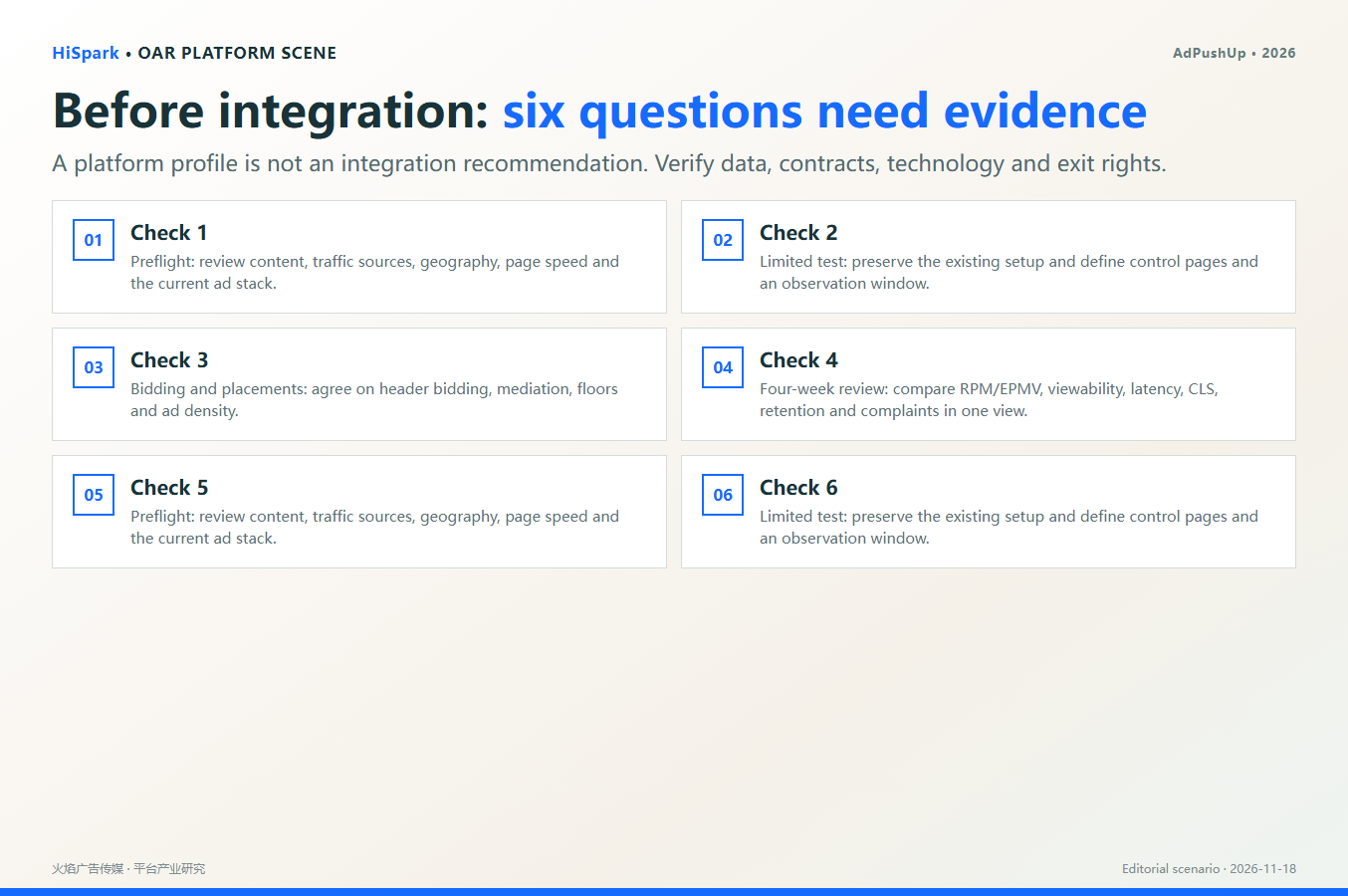
A platform introduction is not an integration recommendation. The following items should have an owner, a current artefact and a decision date.
- Preflight: review content, traffic sources, geography, page speed and the current ad stack.
- Limited test: preserve the existing setup and define control pages and an observation window.
- Bidding and placements: agree on header bidding, mediation, floors and ad density.
- Four-week review: compare RPM/EPMV, viewability, latency, CLS, retention and complaints in one view.
10. Five-minute fit scorecard
Use this as a decision aid, not a platform rating. Start from zero, add two points for each matching fit condition and deduct two for each pause signal.
| Score | Condition |
|---|---|
| ('+2', 'Already true') | Sites with stable monthly traffic, many content pages and a meaningful share of organic or direct visits. |
| ('+2', 'Already true') | Publishers already using AdSense or AdX that want more demand competition, layout experiments and managed operations. |
| ('+2', 'Already true') | Teams with a CMP, privacy documentation, performance monitoring and content-category controls. |
| ('-2', 'Deduct if true') | Sites with only a few landing pages, unstable inventory or a primary goal other than content monetisation. |
| ('-2', 'Deduct if true') | Teams wanting fully self-service access with no operator involvement or only a one-off eCPM comparison. |
| ('-2', 'Deduct if true') | Sensitive child, medical or financial sites without ad-quality, consent and performance review capacity. |
8+ points: run a controlled pilot. 4–7: resolve missing evidence first. Below 4: wait or choose another platform role.
11. Four-stage validation plan
The goal is not to finish integration quickly. The goal is to produce evidence that can survive a commercial, technical and management review.
| Stage | Action |
|---|---|
| Week 1 | Preflight: review content, traffic sources, geography, page speed and the current ad stack. |
| Week 2 | Limited test: preserve the existing setup and define control pages and an observation window. |
| Weeks 3-4 | Bidding and placements: agree on header bidding, mediation, floors and ad density. |
| Post-test | Four-week review: compare RPM/EPMV, viewability, latency, CLS, retention and complaints in one view. |
Write the stop condition before the pilot starts. A platform test without a stop rule usually becomes an accidental permanent dependency.
12. Common failure modes
These are the situations that most often turn a platform introduction into wasted time or a migration problem.
Sites with only a few landing pages, unstable inventory or a primary goal other than content monetisation.
Teams wanting fully self-service access with no operator involvement or only a one-off eCPM comparison.
Sensitive child, medical or financial sites without ad-quality, consent and performance review capacity.
13. Continue reading: adjacent platform roles
Compare adjacent roles instead of treating every platform as a substitute. The strongest stack usually combines complementary layers.
14. Frequently asked questions
How is AdPushUp different from AdSense?
They play different roles. AdSense is closer to a publisher network and demand layer; AdPushUp sits more in multi-demand optimisation, layout experimentation and managed ad ops. Real deployments often coexist with AdSense or AdX.
Does AdPushUp publish standard pricing?
Public pages focus on features and the partnership process. Fees and revenue share are normally confirmed by site, geography and contract. Third-party percentages are not a universal quote.
Is a revenue lift guaranteed after integration?
No. Results depend on traffic quality, geography, placements, page speed, consent, demand competition and operational execution. Use control pages and live data.
When should a publisher wait?
Wait when the site has too few pages, unstable sources, sensitive content, no consent capability or no willingness to review ad quality and performance.