

Sites with regular content, multiple sections and sustained organic traffic.

Ezoic
Publisher monetisation optimisation · Publisher-side revenue operations
1. Platform role and category
Ezoic serves both advertisers and publishers. On the publisher side, its public product map includes ads, apps, video, rewarded ads, identity and audience insight.
It is not a single DSP or SSP. It combines multiple demand sources, testing, data and site-experience tooling into a publisher monetisation platform.
In the industry map it belongs in publisher monetisation optimisation, not in app-SDK mediation categories such as AdMob.
2. Business model and commercial terms
Ezoic currently positions itself as an open-web growth platform and publicly cites 5K+ sites and apps, 768M monthly pageviews and Google Premier Partner status.
Publisher value comes from demand, mediation and testing, EPMV, audience visualisation, identity and site-experience tools rather than one ad tag alone.
Commercial terms, revenue share, traffic thresholds, integration methods and support scope can vary by product and contract and must be verified at the current date.
3. Where value comes from
Value levers
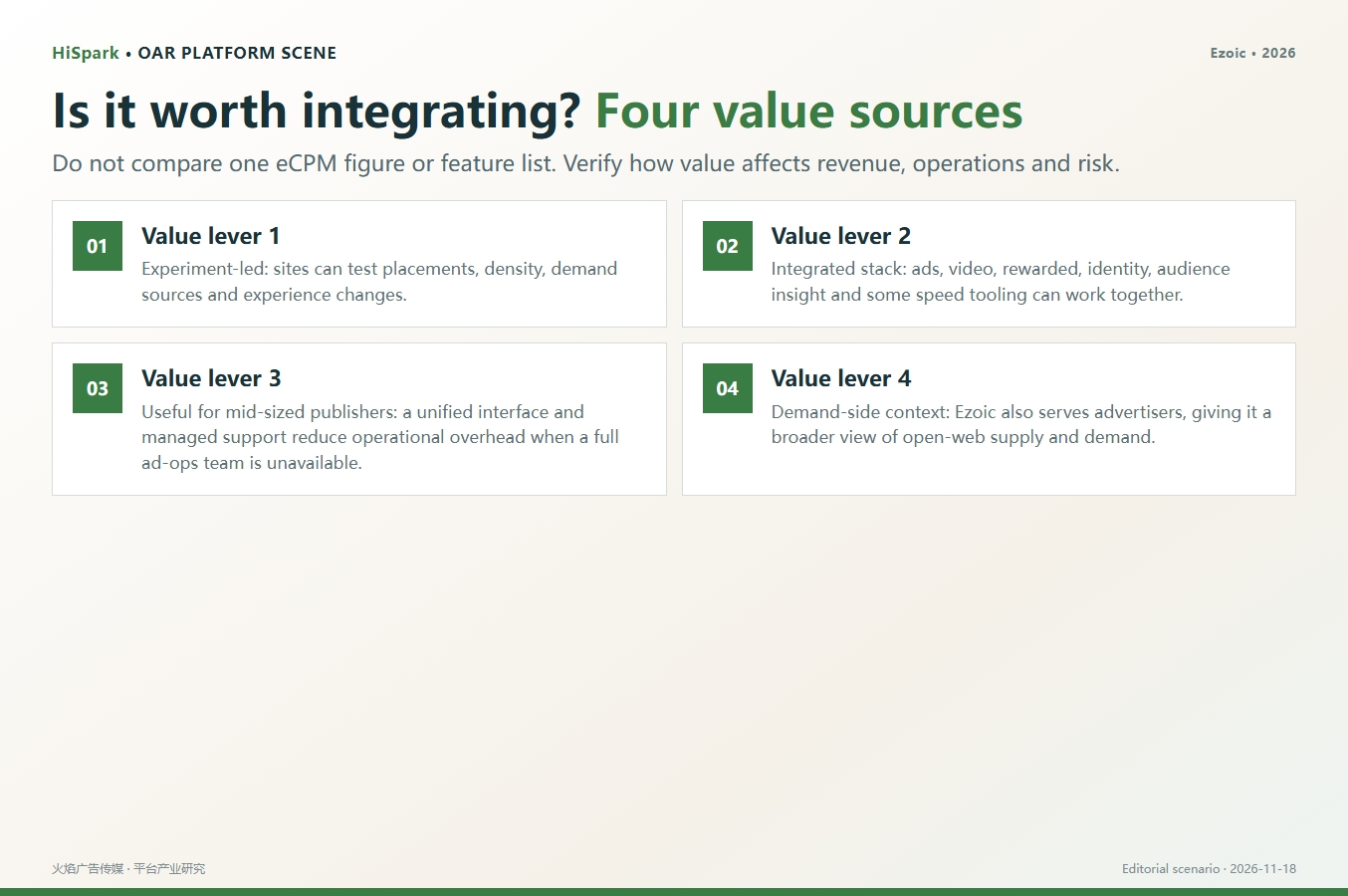
- Experiment-led: sites can test placements, density, demand sources and experience changes.
- Integrated stack: ads, video, rewarded, identity, audience insight and some speed tooling can work together.
Operating value
- Useful for mid-sized publishers: a unified interface and managed support reduce operational overhead when a full ad-ops team is unavailable.
- Demand-side context: Ezoic also serves advertisers, giving it a broader view of open-web supply and demand.
4. Who fits, and who should wait
A good fit when
- Sites with regular content, multiple sections and sustained organic traffic.
- Teams willing to run A/B tests and let one platform manage ads, scripts and some experience settings.
- Publishers needing a unified view of ads, video, identity and audience data.
Do not rush when
- Very small sites without ongoing content that use the website only as a portfolio or lead-generation page.
- Large technical teams requiring complete control over DNS, caching, scripts, source and hosting.
- Sensitive sites without consent, content review and brand-safety controls that want to increase ad density immediately.
5. A controlled integration path
- Document the current CMS, CDN/DNS, CMP, ad stack and baseline performance.
- Test one section or 20–30% of pages with a clear rollback path.
- Decide whether display, video/rewarded, identity tools and analytics are all actually needed.
- Review revenue, speed, search traffic, retention and complaints at four and eight weeks.
6. AdSense, SSP and publisher optimisation are different roles
| Role | Category | What it primarily sells |
|---|---|---|
| Ezoic | Publisher monetisation optimisation | Managed optimisation + demand orchestration |
| AdSense | Publisher network | Demand access and basic reporting |
| SSP | Sell-side platform | Inventory monetisation and exchange access |
A publisher can use multiple layers together. The decision is not which logo replaces another, but who controls demand, inventory, testing, data, compliance and operations.
7. Typical customer scenarios
Put the platform back into a real publisher or advertiser workflow. The same feature set can be valuable for one team and premature for another.
Teams willing to run A/B tests and let one platform manage ads, scripts and some experience settings.
Publishers needing a unified view of ads, video, identity and audience data.
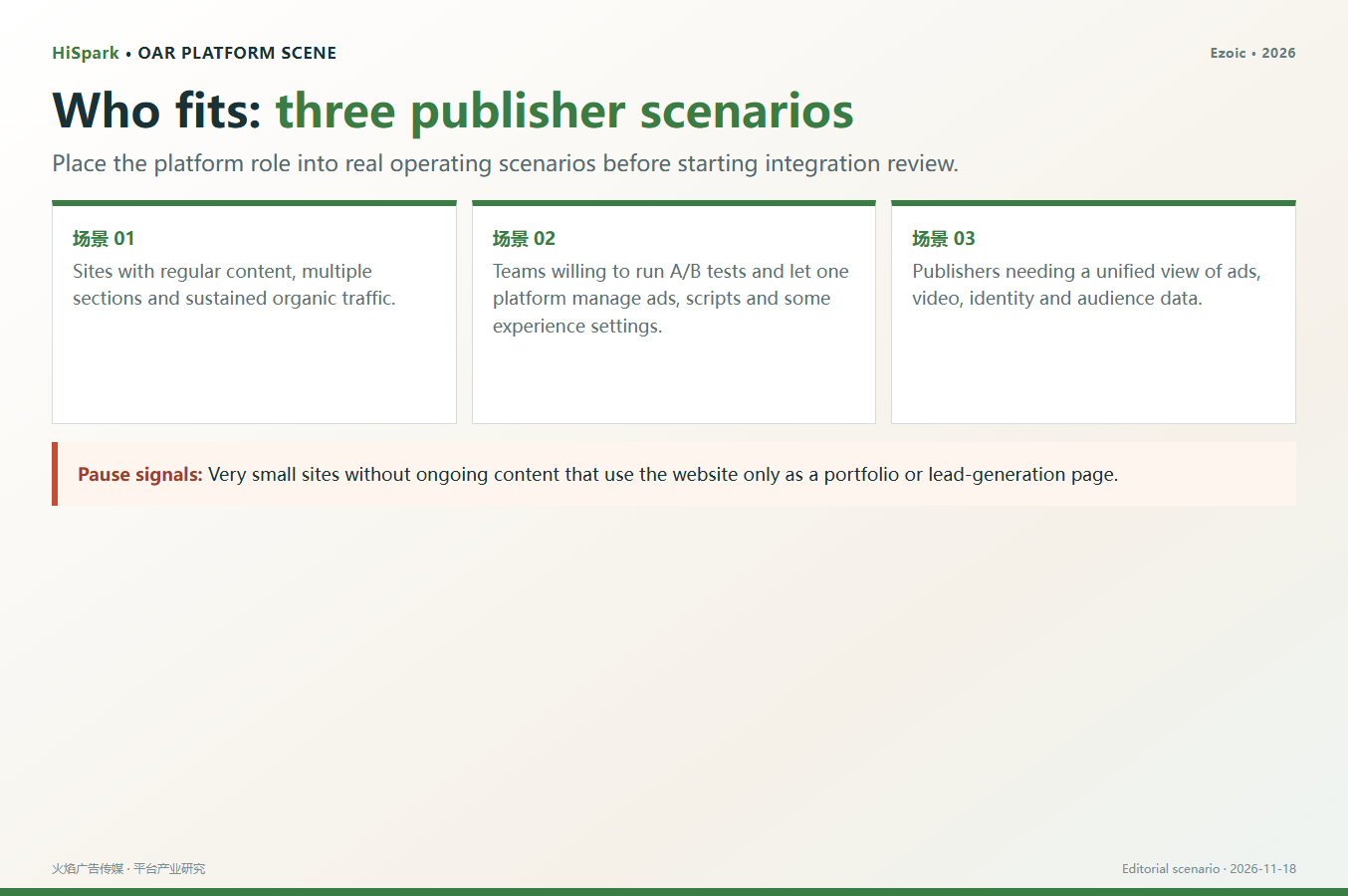
Pause signals
- Very small sites without ongoing content that use the website only as a portfolio or lead-generation page.
- Large technical teams requiring complete control over DNS, caching, scripts, source and hosting.
- Sensitive sites without consent, content review and brand-safety controls that want to increase ad density immediately.
8. How to judge whether the value is real
Do not reduce the decision to one headline metric. Value must be visible in revenue quality, operating hours, risk control and the ability to explain results to management.
| Value source | What to verify | Evidence |
|---|---|---|
| Experiment-led: sites can test placements, density, demand sources and experience changes. | Validate with live data, not a feature list. | Dashboard, contract, test page or implementation record. |
| Integrated stack: ads, video, rewarded, identity, audience insight and some speed tooling can work together. | Validate with live data, not a feature list. | Dashboard, contract, test page or implementation record. |
| Useful for mid-sized publishers: a unified interface and managed support reduce operational overhead when a full ad-ops team is unavailable. | Validate with live data, not a feature list. | Dashboard, contract, test page or implementation record. |
| Demand-side context: Ezoic also serves advertisers, giving it a broader view of open-web supply and demand. | Validate with live data, not a feature list. | Dashboard, contract, test page or implementation record. |
Official product, documentation and case evidence
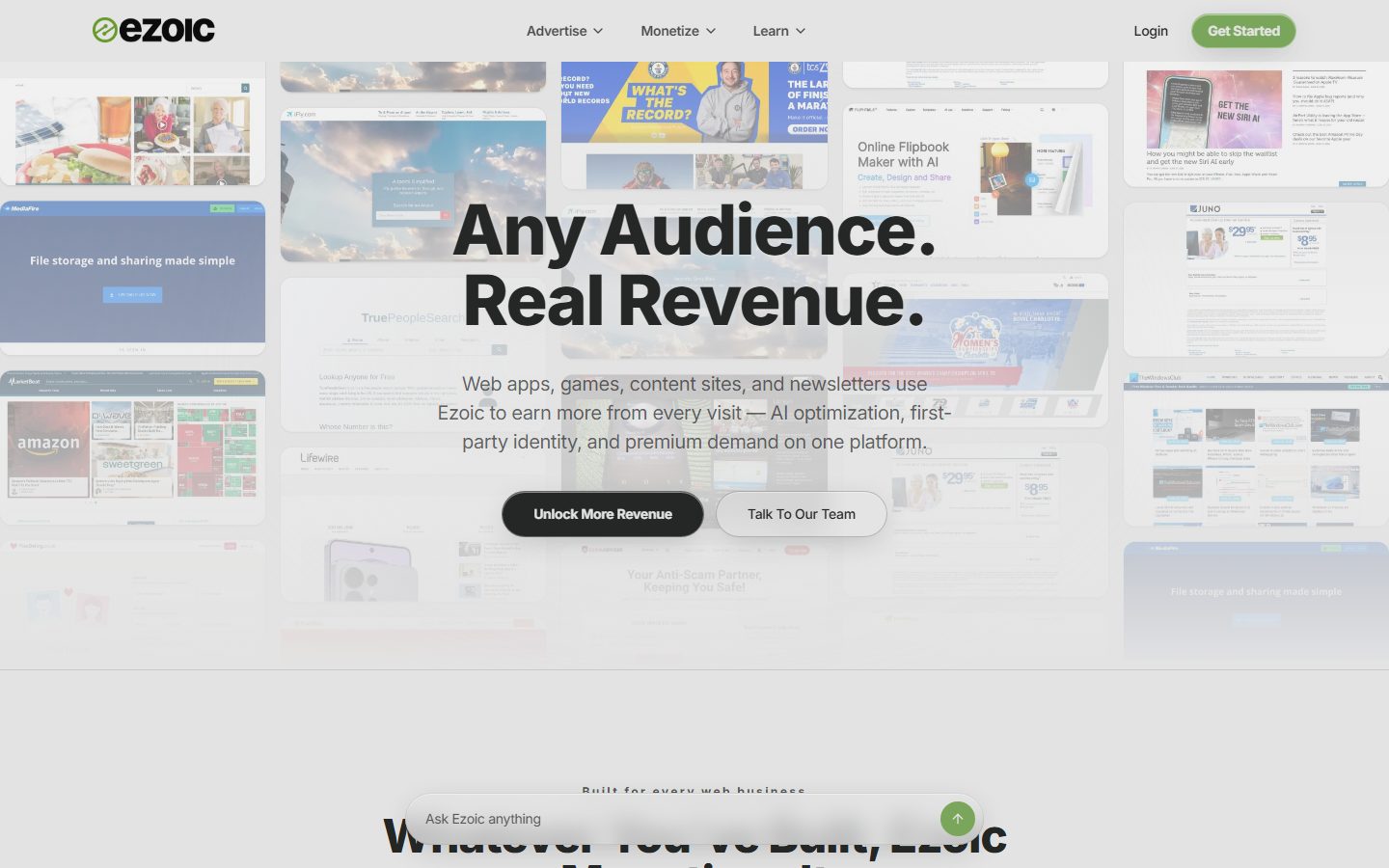
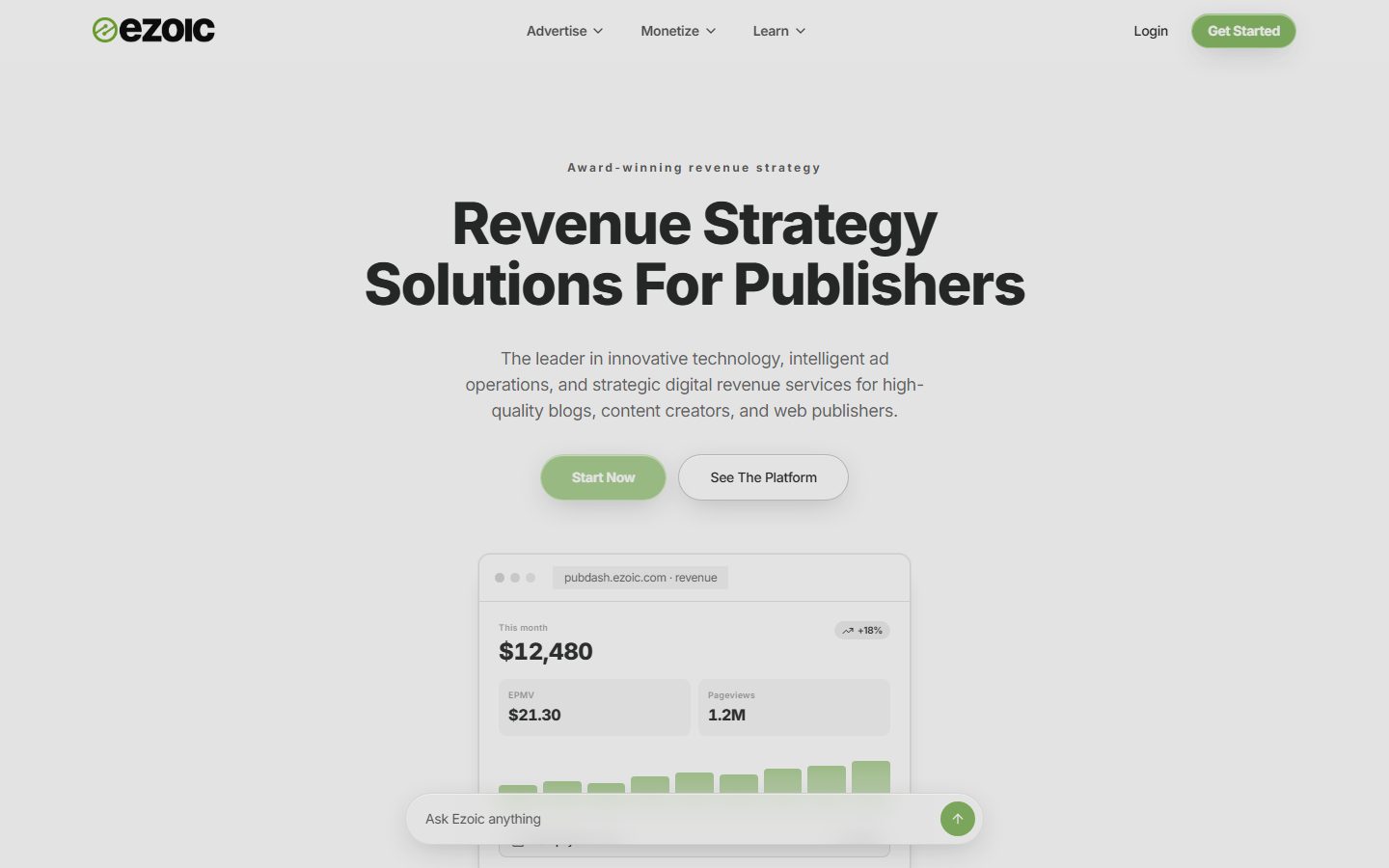
These screenshots come from official product, documentation, eligibility or case-study pages captured on 18 Nov 2026. They are included as visual evidence for the platform’s current public proposition, not as a guarantee of commercial terms.
9. Pre-integration evidence checklist
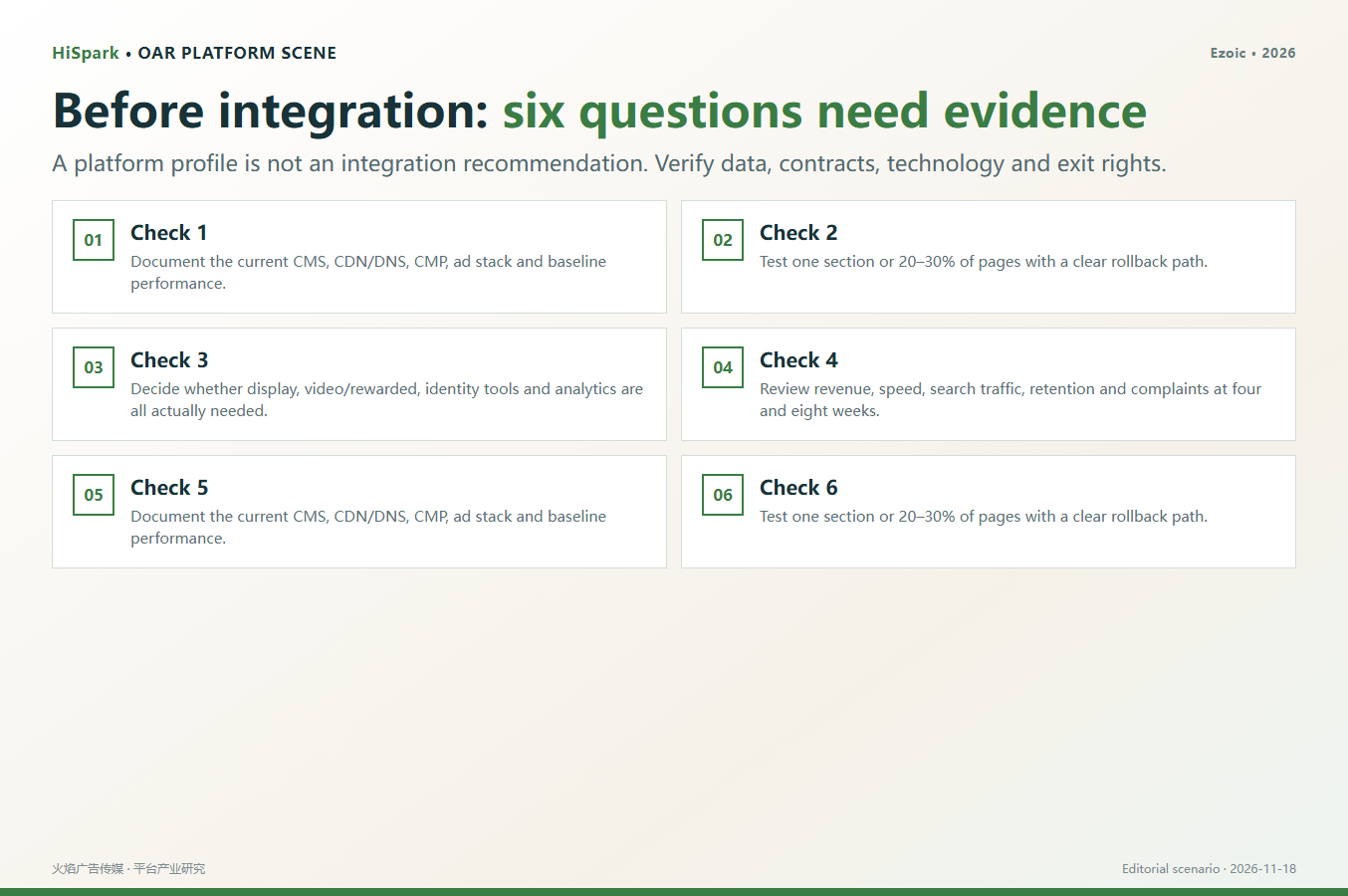
A platform introduction is not an integration recommendation. The following items should have an owner, a current artefact and a decision date.
- Document the current CMS, CDN/DNS, CMP, ad stack and baseline performance.
- Test one section or 20–30% of pages with a clear rollback path.
- Decide whether display, video/rewarded, identity tools and analytics are all actually needed.
- Review revenue, speed, search traffic, retention and complaints at four and eight weeks.
10. Five-minute fit scorecard
Use this as a decision aid, not a platform rating. Start from zero, add two points for each matching fit condition and deduct two for each pause signal.
| Score | Condition |
|---|---|
| ('+2', 'Already true') | Sites with regular content, multiple sections and sustained organic traffic. |
| ('+2', 'Already true') | Teams willing to run A/B tests and let one platform manage ads, scripts and some experience settings. |
| ('+2', 'Already true') | Publishers needing a unified view of ads, video, identity and audience data. |
| ('-2', 'Deduct if true') | Very small sites without ongoing content that use the website only as a portfolio or lead-generation page. |
| ('-2', 'Deduct if true') | Large technical teams requiring complete control over DNS, caching, scripts, source and hosting. |
| ('-2', 'Deduct if true') | Sensitive sites without consent, content review and brand-safety controls that want to increase ad density immediately. |
8+ points: run a controlled pilot. 4–7: resolve missing evidence first. Below 4: wait or choose another platform role.
11. Four-stage validation plan
The goal is not to finish integration quickly. The goal is to produce evidence that can survive a commercial, technical and management review.
| Stage | Action |
|---|---|
| Week 1 | Document the current CMS, CDN/DNS, CMP, ad stack and baseline performance. |
| Week 2 | Test one section or 20–30% of pages with a clear rollback path. |
| Weeks 3-4 | Decide whether display, video/rewarded, identity tools and analytics are all actually needed. |
| Post-test | Review revenue, speed, search traffic, retention and complaints at four and eight weeks. |
Write the stop condition before the pilot starts. A platform test without a stop rule usually becomes an accidental permanent dependency.
12. Common failure modes
These are the situations that most often turn a platform introduction into wasted time or a migration problem.
Very small sites without ongoing content that use the website only as a portfolio or lead-generation page.
Large technical teams requiring complete control over DNS, caching, scripts, source and hosting.
Sensitive sites without consent, content review and brand-safety controls that want to increase ad density immediately.
13. Continue reading: adjacent platform roles
Compare adjacent roles instead of treating every platform as a substitute. The strongest stack usually combines complementary layers.
14. Frequently asked questions
Is Ezoic an ad network or SaaS?
Its public product scope spans publisher ads, demand, testing, identity and website tools. It is not a clean fit for a single network or pure SaaS label; evaluate the modules you will actually use.
Is Ezoic suitable for small sites?
It may lower some operational barriers, but a site still needs stable content, real traffic, consent and ad-quality governance. A low entry barrier does not remove long-term experience risk.
What should be checked before a site-wide migration?
DNS/caching, CMS compatibility, script control, Core Web Vitals, search traffic, rollback and data ownership.
Can Ezoic and AdSense operate together?
Configuration depends on the Ezoic product line, demand sources and contract. Do not stack legacy code from old tutorials; follow the current integration plan.