
A news, sports, entertainment or lifestyle publisher has a clear vertical, editorial context and brand-safety capability.

GumGum
Contextual, CTV & video advertising · Publisher-side revenue operations
1. Platform role and category
GumGum is an advertising technology company spanning contextual, CTV and online video, high-impact display and exchange capabilities.
Its Mindset Graph attempts to infer receptivity from context, sentiment, relevance and engagement rather than relying only on identity or cookies.
The official publisher page connects inventory to 1,000+ agency partners and 3,000+ brands, fitting inventory with a clear brand context.
2. Business model and commercial terms
GumGum operates primarily as publisher demand and brand-solution layer; no uniform share, minimum volume or standard CPM is published.
Contextual, CTV and high-impact display can have different demand, creative specifications and settlement, so pricing should be separated by inventory type.
The official site says it does not use third-party cookies for advertising and uses only a few first-party cookies for browsing experience. That does not remove consent, privacy-policy or regional-compliance obligations.
3. Where value comes from
Value levers
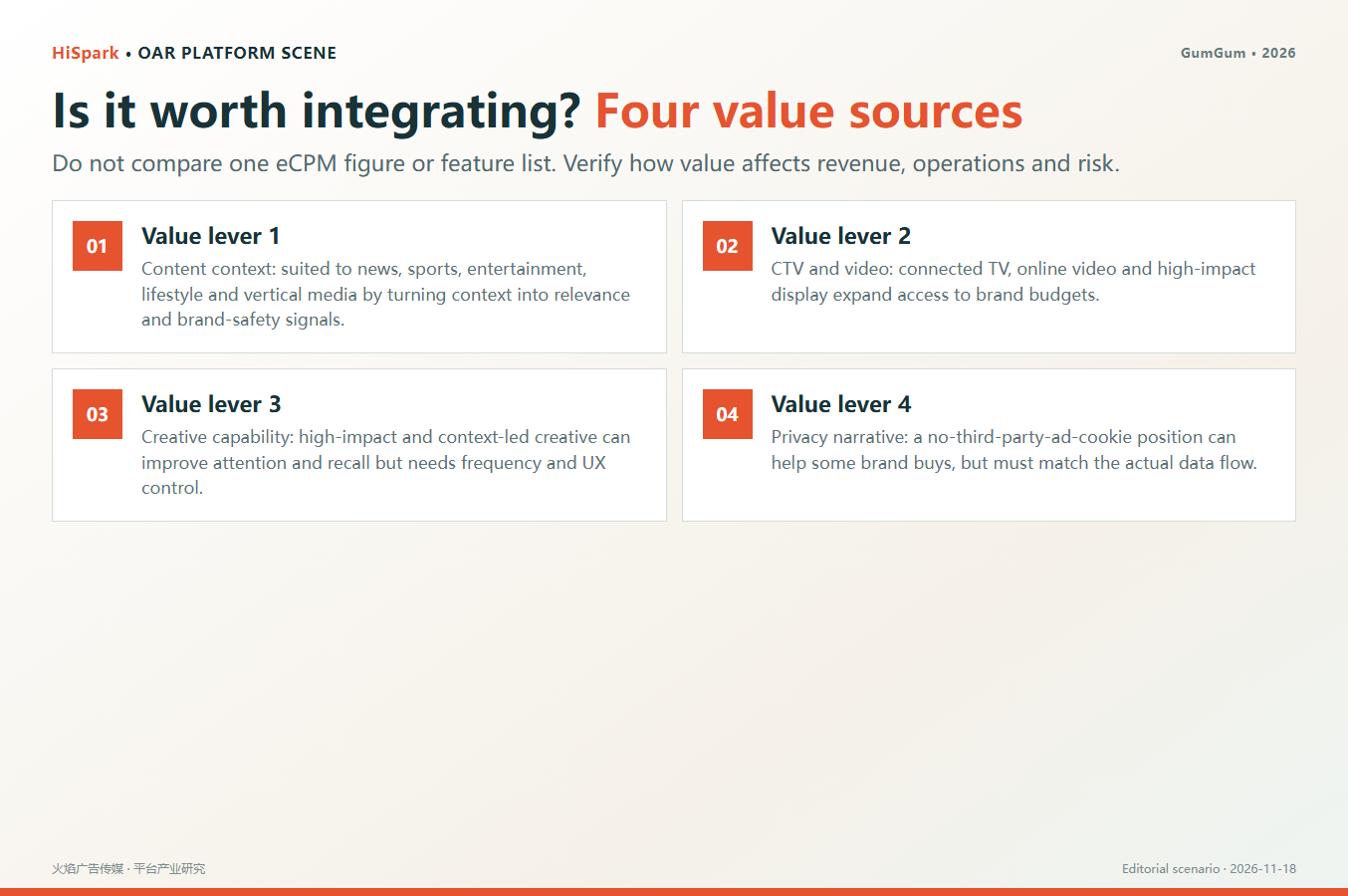
- Content context: suited to news, sports, entertainment, lifestyle and vertical media by turning context into relevance and brand-safety signals.
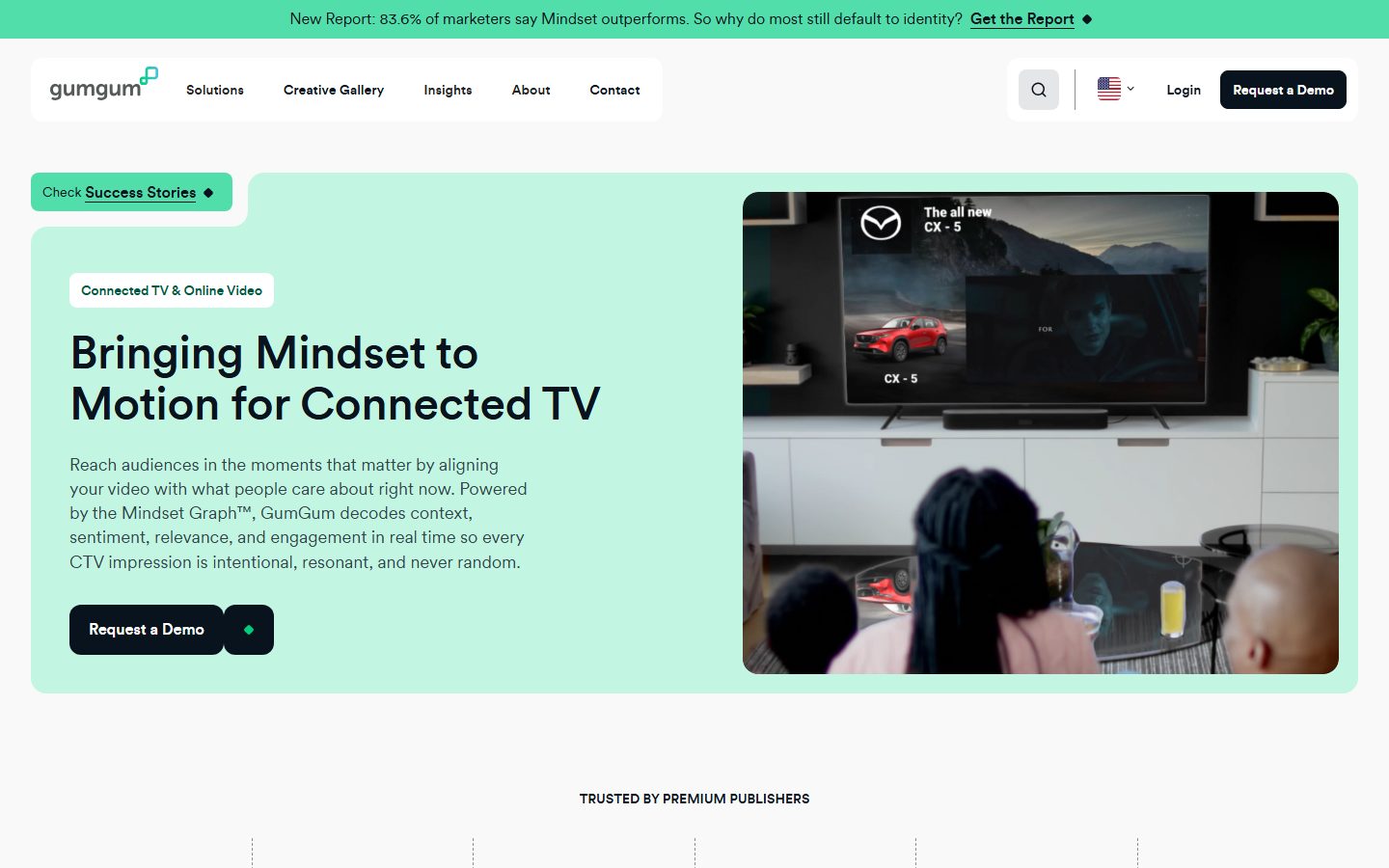
- CTV and video: connected TV, online video and high-impact display expand access to brand budgets.
Operating value
- Creative capability: high-impact and context-led creative can improve attention and recall but needs frequency and UX control.
- Privacy narrative: a no-third-party-ad-cookie position can help some brand buys, but must match the actual data flow.
4. Who fits, and who should wait
A good fit when
- A news, sports, entertainment or lifestyle publisher has a clear vertical, editorial context and brand-safety capability.
- The site has CTV, online video or high-impact display inventory with verifiable viewability and brand-safety data.
- The publisher wants brand demand rather than only performance or low-price programmatic fill.
Do not rush when
- Content is mainly low-quality, sensitive or hard to classify and cannot support brand safety.
- There is no video or CTV inventory but the publisher expects the same brand demand from standard display alone.
- The site cannot tolerate the speed and visual impact of high-impact creative.
- Privacy disclosures do not match actual data flows or the publisher cannot handle consent and opt-out.
5. A controlled integration path
- Map sellable inventory by vertical, brand-safety tier, video or CTV availability and viewability.
- Request details on contextual data, mindset inference, first/third-party cookies and brand-safety processing.
- Run separate brand and performance tests across CPM, viewability, brand lift, speed and bounce.
- Review high-impact creative size, frequency, close controls, mobile rendering and landing-page quality.
- Define data use, audience classification, ad quality, brand safety, make-goods and post-termination processing.
6. AdSense, SSP and publisher optimisation are different roles
| Role | Category | What it primarily sells |
|---|---|---|
| GumGum | Contextual, CTV & video advertising | Contextual, CTV, high-impact and brand demand |
| Magnite | CTV & sell-side platform | CTV, programmatic sell-side and premium inventory |
| Taboola | Native content advertising | Content recommendation, native traffic and performance |
| Media.net | Sell-side platform & managed header bidding | Exclusive demand, managed Prebid and formats |
A publisher can use multiple layers together. The decision is not which logo replaces another, but who controls demand, inventory, testing, data, compliance and operations.
7. Typical customer scenarios
Put the platform back into a real publisher or advertiser workflow. The same feature set can be valuable for one team and premature for another.
The site has CTV, online video or high-impact display inventory with verifiable viewability and brand-safety data.
The publisher wants brand demand rather than only performance or low-price programmatic fill.
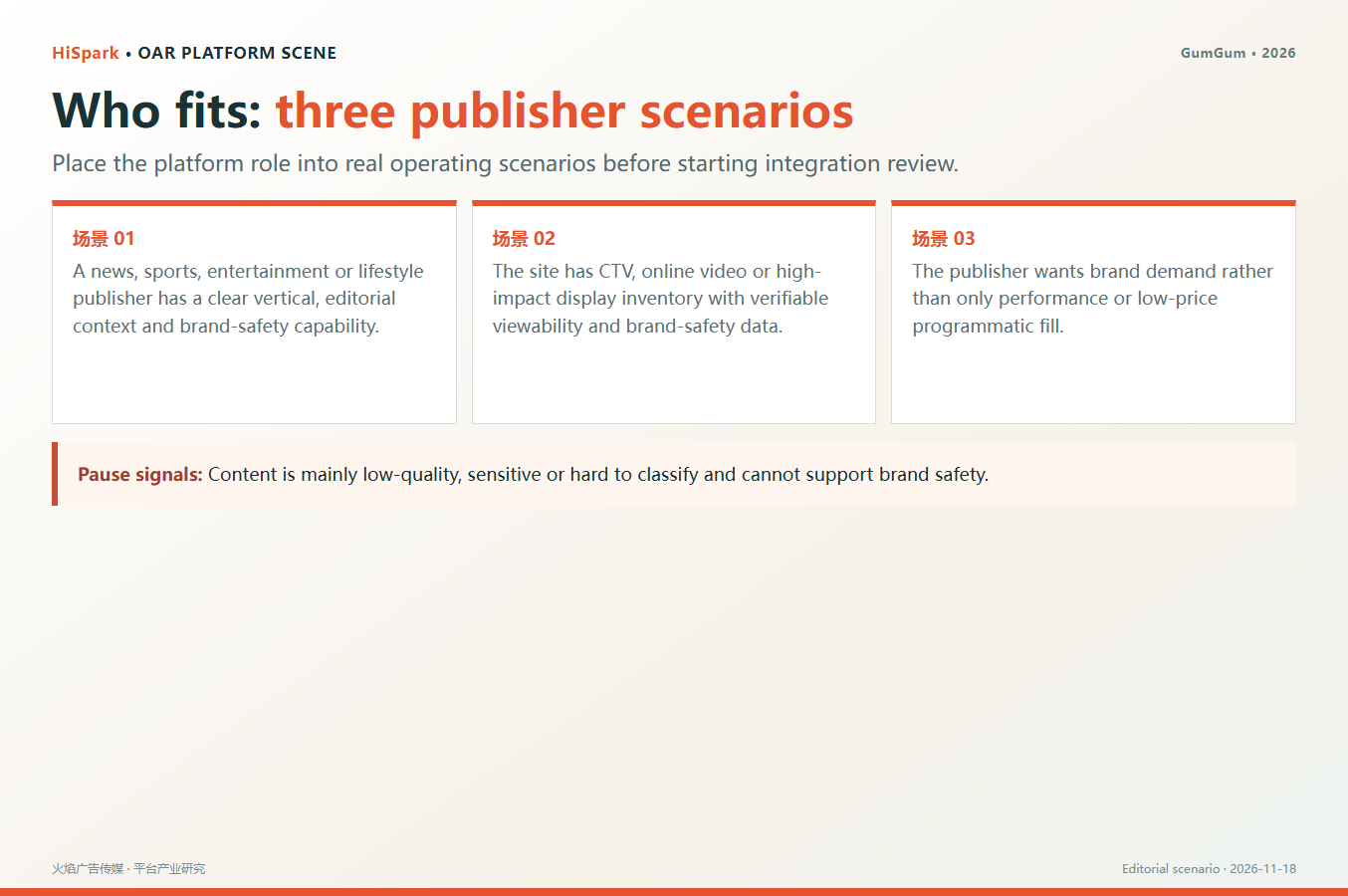
Pause signals
- Content is mainly low-quality, sensitive or hard to classify and cannot support brand safety.
- There is no video or CTV inventory but the publisher expects the same brand demand from standard display alone.
- The site cannot tolerate the speed and visual impact of high-impact creative.
- Privacy disclosures do not match actual data flows or the publisher cannot handle consent and opt-out.
8. How to judge whether the value is real
Do not reduce the decision to one headline metric. Value must be visible in revenue quality, operating hours, risk control and the ability to explain results to management.
| Value source | What to verify | Evidence |
|---|---|---|
| Content context: suited to news, sports, entertainment, lifestyle and vertical media by turning context into relevance and brand-safety signals. | Validate with live data, not a feature list. | Dashboard, contract, test page or implementation record. |
| CTV and video: connected TV, online video and high-impact display expand access to brand budgets. | Validate with live data, not a feature list. | Dashboard, contract, test page or implementation record. |
| Creative capability: high-impact and context-led creative can improve attention and recall but needs frequency and UX control. | Validate with live data, not a feature list. | Dashboard, contract, test page or implementation record. |
| Privacy narrative: a no-third-party-ad-cookie position can help some brand buys, but must match the actual data flow. | Validate with live data, not a feature list. | Dashboard, contract, test page or implementation record. |
Official product, documentation and case evidence
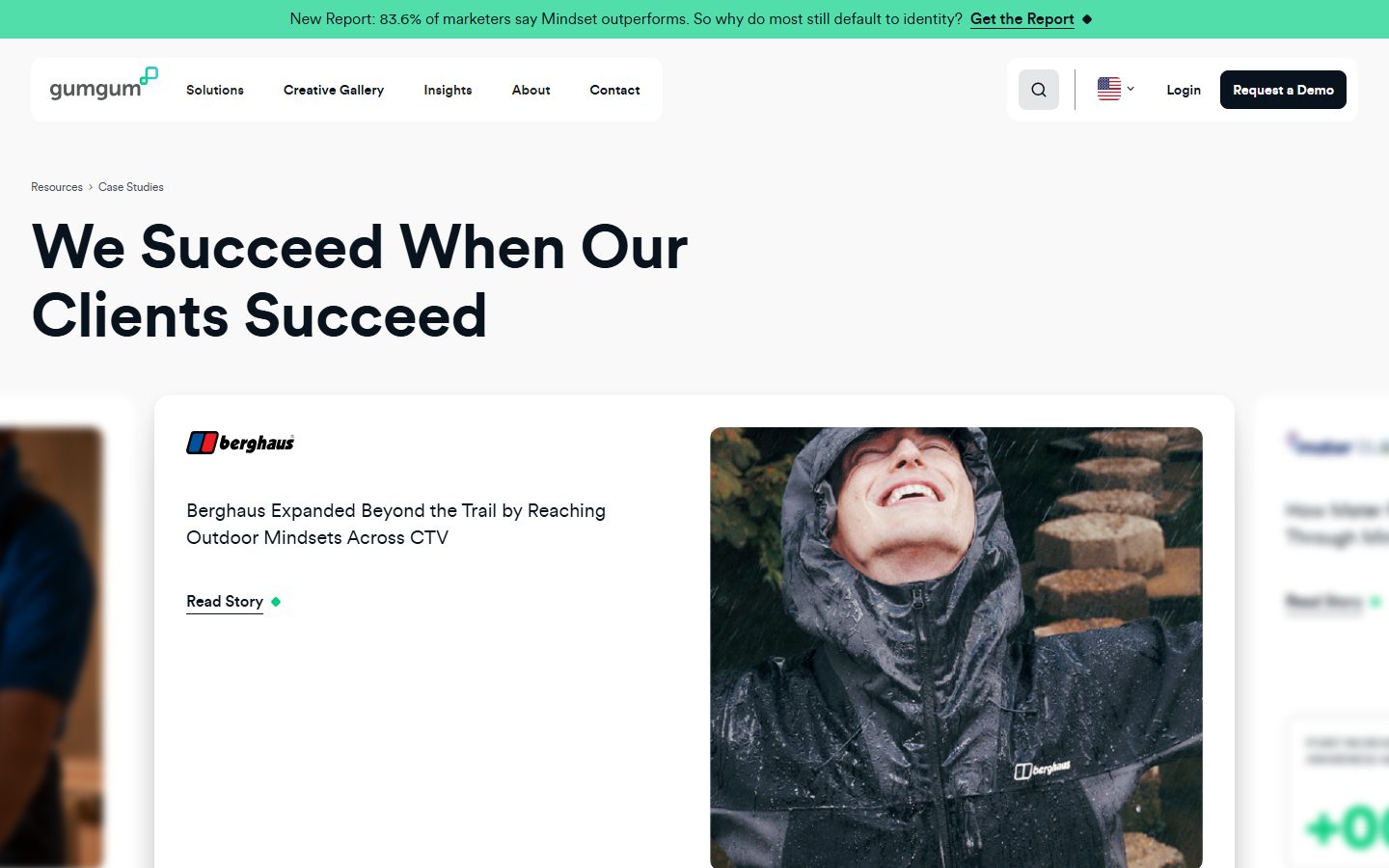
These screenshots come from official product, documentation, eligibility or case-study pages captured on 18 Nov 2026. They are included as visual evidence for the platform’s current public proposition, not as a guarantee of commercial terms.

9. Pre-integration evidence checklist
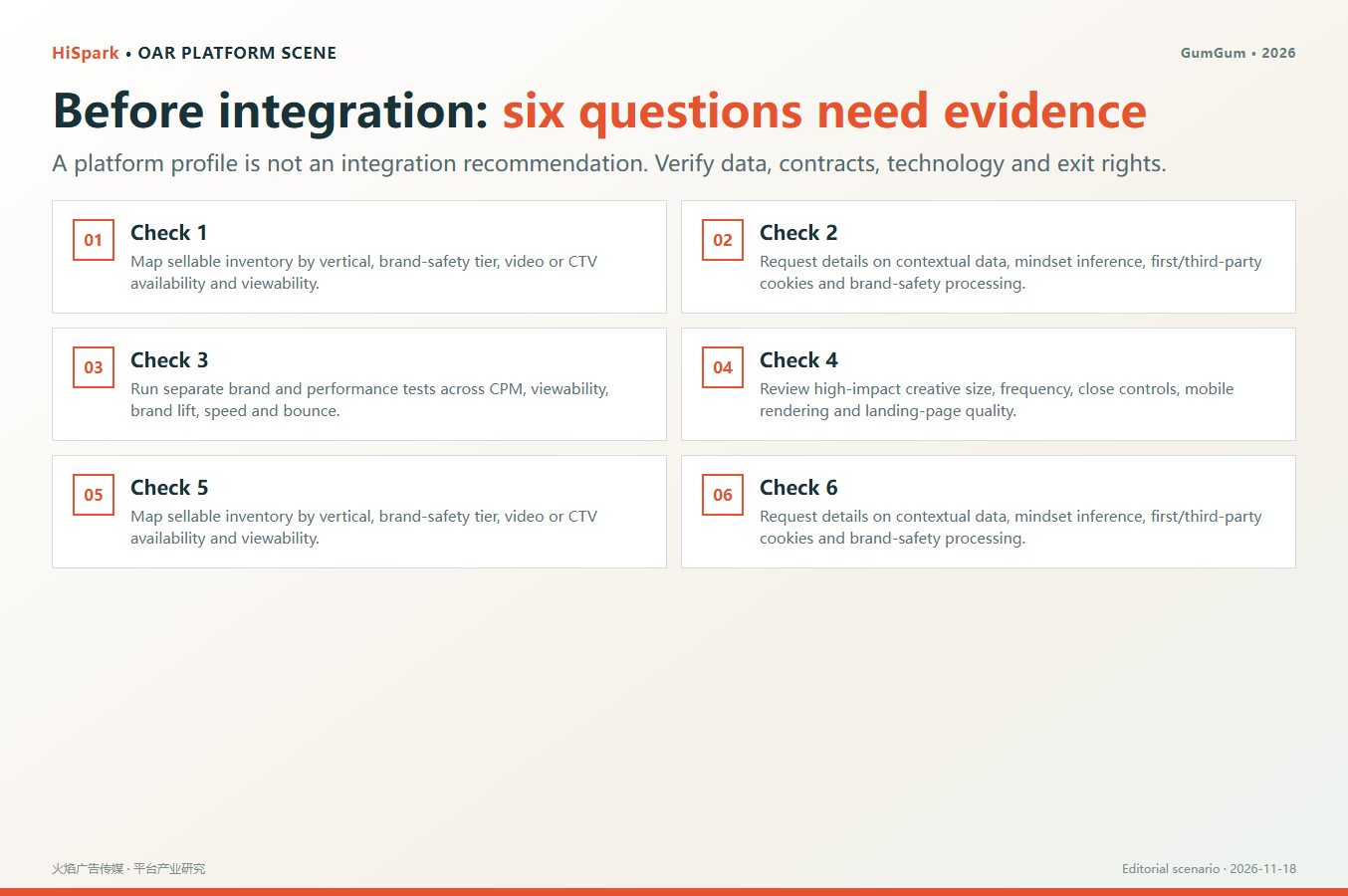
A platform introduction is not an integration recommendation. The following items should have an owner, a current artefact and a decision date.
- Map sellable inventory by vertical, brand-safety tier, video or CTV availability and viewability.
- Request details on contextual data, mindset inference, first/third-party cookies and brand-safety processing.
- Run separate brand and performance tests across CPM, viewability, brand lift, speed and bounce.
- Review high-impact creative size, frequency, close controls, mobile rendering and landing-page quality.
- Define data use, audience classification, ad quality, brand safety, make-goods and post-termination processing.
10. Five-minute fit scorecard
Use this as a decision aid, not a platform rating. Start from zero, add two points for each matching fit condition and deduct two for each pause signal.
| Score | Condition |
|---|---|
| ('+2', 'Already true') | A news, sports, entertainment or lifestyle publisher has a clear vertical, editorial context and brand-safety capability. |
| ('+2', 'Already true') | The site has CTV, online video or high-impact display inventory with verifiable viewability and brand-safety data. |
| ('+2', 'Already true') | The publisher wants brand demand rather than only performance or low-price programmatic fill. |
| ('-2', 'Deduct if true') | Content is mainly low-quality, sensitive or hard to classify and cannot support brand safety. |
| ('-2', 'Deduct if true') | There is no video or CTV inventory but the publisher expects the same brand demand from standard display alone. |
| ('-2', 'Deduct if true') | The site cannot tolerate the speed and visual impact of high-impact creative. |
8+ points: run a controlled pilot. 4–7: resolve missing evidence first. Below 4: wait or choose another platform role.
11. Four-stage validation plan
The goal is not to finish integration quickly. The goal is to produce evidence that can survive a commercial, technical and management review.
| Stage | Action |
|---|---|
| Week 1 | Map sellable inventory by vertical, brand-safety tier, video or CTV availability and viewability. |
| Week 2 | Request details on contextual data, mindset inference, first/third-party cookies and brand-safety processing. |
| Weeks 3-4 | Run separate brand and performance tests across CPM, viewability, brand lift, speed and bounce. |
| Post-test | Review high-impact creative size, frequency, close controls, mobile rendering and landing-page quality. |
Write the stop condition before the pilot starts. A platform test without a stop rule usually becomes an accidental permanent dependency.
12. Common failure modes
These are the situations that most often turn a platform introduction into wasted time or a migration problem.
Content is mainly low-quality, sensitive or hard to classify and cannot support brand safety.
There is no video or CTV inventory but the publisher expects the same brand demand from standard display alone.
The site cannot tolerate the speed and visual impact of high-impact creative.
13. Continue reading: adjacent platform roles
Compare adjacent roles instead of treating every platform as a substitute. The strongest stack usually combines complementary layers.
14. Frequently asked questions
Does GumGum only run contextual ads?
No. The official platform also covers CTV, online video, high-impact display and exchange capabilities.
Does avoiding third-party cookies eliminate privacy risk?
No. First-party data, contextual classification, consent, privacy disclosure and regional law still apply.
Can every publisher access brand budgets?
No. Brand demand depends on context, inventory quality, brand safety, viewability and advertiser priorities.
Can high-impact ads hurt SEO?
They can affect speed and experience. Loading, layout, frequency and mobile rendering must be controlled and tested with real data.